Split the prize pool

Poker Payout Calculator

Use this poker payout calculator to turn a home tournament prize pool into clear finishing-place payouts before the first hand starts.

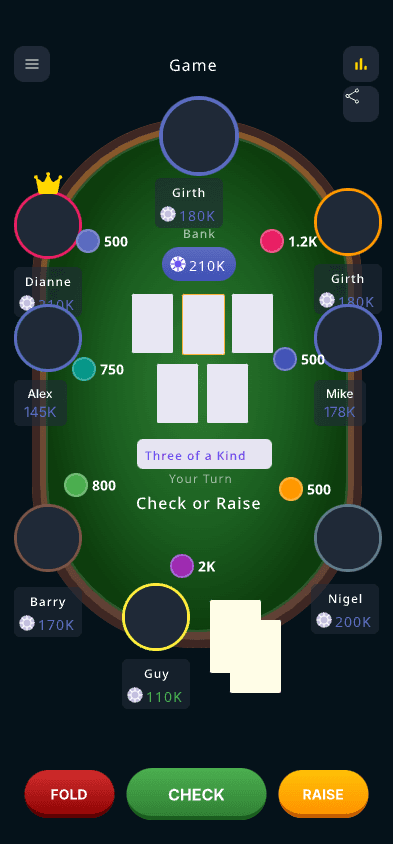
PokerChip.live digital poker table

Set payout percentages before play begins

Keep the prize pool transparent for every player

Adjust paid places for small home tournaments

賞金分配

ポーカー賞金計算機

賞金総額

$500.00

入賞順位

3

割合の合計

100.0%

#1
$250.00
#2
$150.00
#3
$100.00

賞金がすべて配分されています。

Agree before the tournament starts

Payout disputes are easiest to avoid when players know the prize pool, paid places, and percentages before cards are dealt.

Keep small games simple

For casual tournaments, paying the top two or three places is usually easier than creating a deep payout structure.

Pair payouts with live chip tracking

Use PokerChip.live to run the room and this payout calculator to publish the prize split for the night.

How flat should the payouts be

The default instinct is to pay the winner most of the pool, and for a serious field that is right. For a recurring home game it is usually wrong: a structure where first place takes 70% means most of the table goes home with nothing most weeks, and a game where most people usually lose everything stops being a game people come back to. Paying more places more flatly costs the winner a little and keeps the seat filled.

Pay roughly the top 15%

The cardroom convention is to pay about one place per ten entrants, and it is a reasonable starting point: six players pay one, nine or ten pay two, eighteen pay three. Paying more places than that at a small field flattens the prize into something nobody is playing for; paying fewer makes it a lottery.

Make the minimum payout worth having

A last paid place that returns slightly more than the buy-in is the most common and most pointless structure in home poker — hours of play to get your money back. Set the bottom paid place at roughly one and a half to two buy-ins so that cashing means something, and take the difference off the top.

Round to chips people can actually pay

Percentages produce numbers like $37.40, and nobody has that. Round every payout to something the group can hand over — whole notes, or whole buy-ins — and give the rounding remainder to first place rather than leaving a stray amount for the table to argue about. The calculator above does the rounding so the payouts always sum to exactly the pool.

Announce the structure before the first hand

Not after somebody busts. A payout structure agreed while three players are still in is a negotiation, and negotiations at that point favour whoever is loudest rather than whoever is right. Write it up, show it, deal the cards.

Bubble protection and other house rules

Some groups return the buy-in to the first player out of the money. It is a nice gesture and it costs the winners very little, but it has to be decided in advance because it changes how the last unpaid place plays. The same is true of any deal to chop the remaining prize pool — agree the principle early, work the numbers when it comes up.

FAQ

poker payout calculatorに関するよくある質問

01

How do I calculate poker tournament payouts?

Multiply the prize pool by each finishing-place percentage. Make sure all payout percentages add up to 100%.

02

How many places should a home poker tournament pay?

Small home tournaments often pay the top two or three places. Larger fields can pay more places with smaller percentages.

03

What is a common 3-place payout split?

A common casual split is 50% for first, 30% for second, and 20% for third. It rewards the win clearly while still returning something to the other two players who made it deep enough to be there at the end.

04

What percentage should each place get?

The rule of thumb is that first place takes 45 to 55 percent and each place below gets roughly two thirds of the one above it. For six players paying three places, 50/30/20 works; for eighteen players paying five, 40/25/15/12/8 spreads it more evenly.

05

How should payouts work for 6, 9 or 18 players?

Six players usually pay two or three places, nine players pay three, and eighteen players pay four or five. The general guide is to pay roughly the top fifteen to twenty percent of the field so that cashing still feels like an achievement.

06

Should a home tournament be winner-take-all?

Only for very small fields. With four or five players winner-take-all is fine and keeps the maths simple, but past six players it makes most of the night feel pointless for everyone who does not win, and people stop coming back.

07

How do I round payouts to real chip and cash denominations?

Calculate the exact percentages first, then round each place to the nearest note you actually have — usually five or ten — and give any remainder to first place. Never round in a way that makes the payouts add up to more than the prize pool.

08

Can we change the payout split during the game?

Agree the split before the first hand and leave it alone. Changing it later always favours whoever is ahead at that moment, which is why a deal at the final table should only happen if every remaining player agrees to it.

09

Should I include rebuys in the prize pool?

Yes. If rebuys are part of the tournament, add them to the final prize pool before calculating payouts.

010

Does PokerChip.live hold the prize money?

No. PokerChip.live does not handle money. It helps track game state while players manage payments privately between themselves.

011

How many places should a poker tournament pay?

Roughly one per ten entrants: six players pay one place, nine or ten pay two, eighteen pay three. Paying more than that at a small field flattens the prize into something nobody is playing for.

012

What is a good payout structure for a home game?

Flatter than a cardroom's. Something like 50/30/20 for three places keeps more of the table in the money, which matters more for a recurring game than maximising first prize.

013

Should the last paid place just get their buy-in back?

No — that is hours of play for nothing. Set the minimum payout at one and a half to two buy-ins and take the difference off the top.

014

How do you handle payouts that do not divide evenly?

Round to amounts the group can actually hand over and give the remainder to first place. The calculator does this so the payouts always sum to exactly the pool.

次のポーカーナイトを始めよう

無料でルームを作成し、プレイヤーを招待。スタックをリアルタイムで記録し、ゲーム終了後は結果を共有できます。

ゲームルームを作成