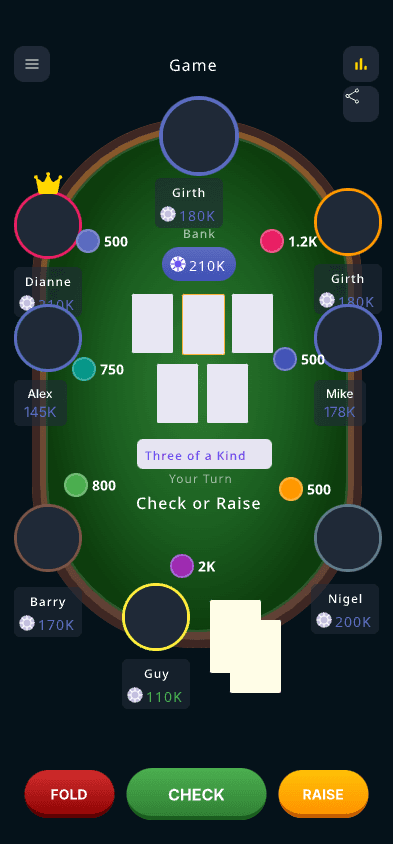
そもそもなぜサイドポットがあるのか
人は自分が失いえた分しか勝てません。誰かが 20 でオールインしていて、残り2人がその上で賭け続けているなら、その上乗せ分はショートスタックが争っているポットの一部にはなりえません。そうでなければ、短いこと自体がノーリスクの上振れになってしまいます。だからポットが分かれます。全員がショートの額まで出した分がメインポット、余りが深い人たちだけで争うサイドポットです。
メインポットとサイドポットを層に分ける
降りたプレイヤーの投入分は数えるが、獲得権は与えない
オールインのハンドでの揉め事を減らす
3人がそれぞれ違う額でオールインした場合です。メインポットは最も小さいオールイン額に参加人数を掛けた額で上限が決まり、各サイドポットも同じやり方で次に小さいスタックに対して上限が決まります。そのポットに払い込んだ人だけが、そのポットを取れます。
プレイヤー
A
オールイン額
20
メインポット
20
サイド1
—
サイド2
—
プレイヤー
B
オールイン額
60
メインポット
20
サイド1
40
サイド2
—
プレイヤー
C
オールイン額
100
メインポット
20
サイド1
40
サイド2
40
プレイヤー
合計
オールイン額
180
メインポット
60
サイド1
80
サイド2
40
プレイヤー
獲得できる人
オールイン額
メインポット
A・B・C
サイド1
B または C
サイド2
C のみ
3人オールインがややこしくなる前に、これが誰でも追える形です。どれだけ大きな場面も同じ規則で組み上がります。
プレイヤー
A
オールイン額
30
メインポット
30
サイドポット
—
プレイヤー
B
オールイン額
80
メインポット
30
サイドポット
50
プレイヤー
合計
オールイン額
110
メインポット
60
サイドポット
50
プレイヤー
獲得できる人
オールイン額
メインポット
A または B
サイドポット
B のみ
オールイン補助
ポット合計
1,000
メインポット
400
獲得資格: あきら, ばんり, ちひろ
サイドポット 1
450
獲得資格: ばんり, ちひろ
サイドポット 2
150
獲得資格: 資格のあるプレイヤーなし
人は自分が失いえた分しか勝てません。誰かが 20 でオールインしていて、残り2人がその上で賭け続けているなら、その上乗せ分はショートスタックが争っているポットの一部にはなりえません。そうでなければ、短いこと自体がノーリスクの上振れになってしまいます。だからポットが分かれます。全員がショートの額まで出した分がメインポット、余りが深い人たちだけで争うサイドポットです。
手順としては、オールイン額を小さい順に並べて上へ進みます。最小のオールインがメインポットの上限を決め、まだ残っている全員がその額を出します。次に小さい額が第1サイドポットの上限を決め、それより上の全員から集めます。以下同様です。逆向きにやるのが、ホームゲームで計算を間違える典型です。
計算機は投入額を並べ替え、異なるオールイン水準ごとに層を作り、その層で権利のあるプレイヤーを並べます。層が外へ行くほど顔ぶれは狭まります。外側の層を取れる人は内側も取れますが、逆は成り立ちません。
カードルームの手順は、最後のサイドポットから配ってメインポットへ戻っていく形です。小さいポットの参加者は大きいポットの参加者の部分集合だからです。この順だと、たいてい一番結果を気にしているショートスタックが最後に知ることになるので、あえて逆順にするホームゲームもあります。どちらでも金額は同じです。毎回同じ順にすることが大事です。
降りる前にポットへ入れたチップはポットに残ります。抽象的には当たり前でも、卓上では混乱のもとです。降りた人の払い込みが、その人には取れないポットの中に入ることになるからです。これは不公平ではありません。金を入れた時点では、その人にも勝つ機会があったのです。
一番深いプレイヤーが誰もコールできない額を賭けた場合、超過分はサイドポットとして残らず本人に返されます。権利者が1人しかいないサイドポットはポットではなく、そのプレイヤーのチップです。ホームゲームではこれを中央に残したまま勝った扱いで配ることがあり、技術的な行き違いで静かに金が移動します。
2人のオールインならメインポットとサイドポット1つで、たいていの人は暗算できます。3人になると権利の異なるサイドポットが2つでき、そこから卓が同じチップを5分間数え直し始めます。上にスタックを入力するほうが速く、そして何より毎回同じ答えが出ます。
2人がちょうど同じ額でオールインした場合、その2人の間にサイドポットは生まれません。層が分かれる条件は額が違うことです。ここを見落とすと、存在しない空の層を数えてしまい、それが誰のものかを探して時間を使うことになります。
PokerChip.live はハンドの進行中にベット、ポット、各プレイヤーの状態を記録するので、オールインの場面は後から見返しやすくなります。というより、その場で分配が正しく出ているので、見返す必要自体が減ります。
FAQ
01
オールインの水準ごとにチップをまとめます。その額以上を投入した全員がその層に払い込み、権利の残っている人だけがその層を取れます。
02
降りる前に入れたチップはポットに残りますが、降りた後はどのポットも獲得できません。
03
そのハンドにチップを入れた全員が払い込める、最初の層のポットです。
04
オールイン額が複数あると、サイドポットも複数できます。短いスタックは自分が全額カバーした層しか取れません。
05
PokerChip.live にはホームゲーム向けのポットとアクションの記録機能があります。このページは単体で使える手早いサイドポット計算ツールです。
06
オールイン額を小さい順に並べます。最小がメインポットの上限で、残っている全員がその額を出します。次に小さい額が第1サイドポットの上限、以下同様です。
07
そこに払い込んだ人だけです。その層の上限より少ない額でオールインしたプレイヤーは、何を持っていてもその層は取れません。
08
カードルームでは最後のサイドポットから配ってメインポットへ戻ります。金額はどちらでも同じで、一貫していることが大事です。
09
賭けた本人に返ります。権利者が1人だけのサイドポットはポットではなく、そのままその人のチップです。
010
ありません。降りる前のチップはポットに残りますが、降りた時点でどのポットも獲得できなくなります。自分が払い込んだ層も含めてです。
011
その2人の間にサイドポットはできません。サイドポットは額が違うときにだけ生まれます。
012
変わりません。各ポットは、そのポットの権利者の中で最も強い役に、通常の順位どおりに渡されます。
無料でルームを作成し、プレイヤーを招待。スタックをリアルタイムで記録し、ゲーム終了後は結果を共有できます。
ゲームルームを作成