Before players arrive
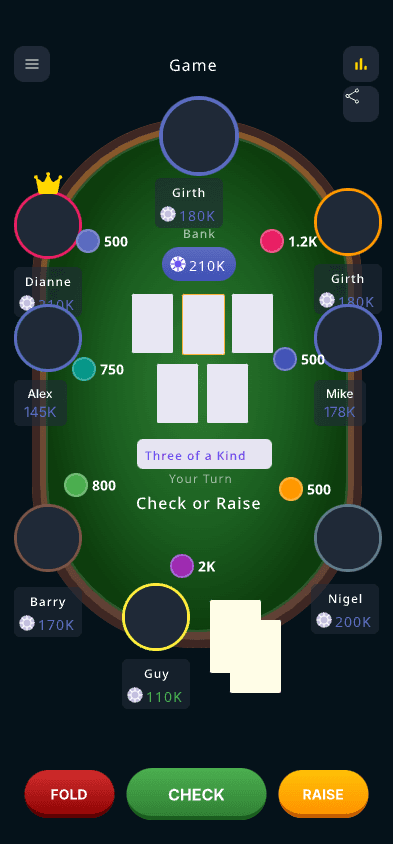
Choose the game type, buy-in, blind structure, seat count, and house rules. Create a PokerChip.live room and keep the QR code ready.
Host a smoother game
A little preparation makes a home poker night feel organized without becoming formal. Use this checklist before players arrive.
Set buy-ins and blinds before the first hand
Prepare room links and QR codes
Avoid settlement confusion after the last hand
Almost everything that goes wrong at a home game is decided before anyone sits down. This is the order that avoids the usual problems.
When
A week out
What
Confirm the number of players
Why it matters
The chip set and the table size both depend on it
When
A week out
What
Agree the stake and the format
Why it matters
Nobody discovers the buy-in at the door
When
The day before
What
Count the chips
Why it matters
A missing denomination is fixable on Friday, not Saturday
When
The day before
What
Two decks, different backs
Why it matters
One is shuffled while the other is dealt
When
An hour before
What
Set the blinds and the timer
Why it matters
Structure decided while nobody is waiting
When
An hour before
What
Write the payout structure down
Why it matters
A deal agreed later is a negotiation
When
At the table
What
Dealer button and blind markers
Why it matters
The most common bookkeeping error there is
When
At the table
What
Hand rankings within reach
Why it matters
Settles the argument without anyone being corrected
Ranked by how often they end an evening badly rather than by how serious they sound.
What goes wrong
An unrecorded rebuy
When it surfaces
At settlement
The fix, in advance
Record it when the money changes hands
What goes wrong
The button did not move
When it surfaces
Two hands later
The fix, in advance
A physical button, moved before the deal
What goes wrong
Running out of small chips
When it surfaces
Around midnight
The fix, in advance
20 of the smallest per player, plus a reserve
What goes wrong
A rules dispute mid-pot
When it surfaces
With chips already in
The fix, in advance
Agree string bets and misdeals before hand one
What goes wrong
Nobody agreed the payouts
When it surfaces
When someone busts
The fix, in advance
Write the structure down before dealing
Players
6-8 seats
Setup
15 minutes
After game
Share results
Choose the game type, buy-in, blind structure, seat count, and house rules. Create a PokerChip.live room and keep the QR code ready.
Confirm who is playing, record starting stacks, agree on rebuys, and make sure everyone understands how pots are awarded.
End the room, review final standings, settle privately, and share the result page to spark the next game.
Buy-in, rebuy policy, and whether there is a cap. Every one of those is easy to agree on Tuesday and awkward to agree at 9pm with somebody's coat still on. The specific number matters far less than everybody having heard it before they sat down.
One deck is being shuffled while the other is being dealt, which roughly halves the dead time in the game. Different backs so a stray card is instantly identifiable as belonging to the other deck. This is the cheapest single upgrade to a home game and almost nobody does it.
A table that seats ten comfortably seats eight for poker, because everyone needs room for a stack, a drink and their elbows. Squeezing in two more players means cards get exposed and chips get knocked over, and the game is slower with ten anyway. If you have ten people, run two tables or a tournament with a final table.
Anything greasy ends up on the deck and stays there. Things in bowls that people reach across the table for knock over stacks. The practical answer is food away from the table and a break to eat it, which doubles as the moment to colour up.
String bets, verbal declarations being binding, whether a card exposed by the dealer is dead, and what happens on a misdeal. You do not need a rulebook — you need each of those decided once, out loud, before the first hand, so that when one happens it is not a debate about who is more confident.
The end of the night is where a good game turns into a group chat. Agree in advance whether it is cash, transfers, or a running tab between regulars, and keep a record of buy-ins as they happen rather than reconstructing them at the end. This is the single thing most likely to make somebody not come back.
FAQ
01
You need cards, players, a table, house rules, buy-in agreement, blinds, and a way to track chips and settlement.
02
Six to eight players is a comfortable range for many home Texas Hold'em games.
03
Yes. Agree on buy-ins, rebuys, cash-outs, blinds, breaks, and how disputes are handled.
04
Track buy-ins and stacks during the game, then review final standings before anyone leaves.
05
Yes. Create a room, invite players, track stacks, and share results after the game.
06
Eight is comfortable at a table that seats ten for dinner. Everyone needs room for a stack, a drink and their elbows, and ten makes the game slower as well as messier.
07
It is the cheapest upgrade to a home game. One deck is shuffled while the other is dealt, which roughly halves the dead time. Use different backs so a stray card is obvious.
08
String bets, whether verbal declarations bind, dead cards, and misdeals. Each decided once before the first hand, so it is not a debate when it happens.
09
Record buy-ins as they happen and settle at the end from the record. Reconstructing the night from memory at 1am is what turns a good game into a group chat.
010
Less at the table than you think. Anything greasy ends up on the deck; anything people reach across for knocks over stacks. Put it away from the table and take a break.
011
Cash if people arrive at different times, a tournament if everyone can start together and you want a defined end. A tournament with a rebuy period splits the difference.
012
Moving the dealer button. It is the most frequent bookkeeping error in home poker and it usually surfaces two hands after it happened.
Create a free room, invite players, track live stacks, and share the final result when the game ends.
Create Game Room