값은 첫 핸드 전에 정하고 적어 둡니다
칩 색깔의 금액은 세계 공통 규칙이 아니라 관례입니다. 세트마다 다르고, 특히 저가 세트는 색 구성이 제각각입니다. 그러니 시작 전에 한 번 정하고 종이에 적어 테이블 가운데 두십시오. 새벽 두 시에 파란 칩이 십인지 이십인지로 다투는 것보다 삼십 초 먼저 적어 두는 편이 낫습니다.
홈게임 호스트를 위한 안내
홀덤에서 점수를 기록하는 도구가 칩입니다. 베팅도 블라인드도 팟도 결국은 칩이 테이블 위를 옮겨 다니는 것뿐입니다. 그래서 규칙보다 먼저 정해야 하는 것이 칩입니다. 어떤 색이 얼마인지, 한 사람에게 몇 개를 주는지, 누가 얼마를 냈는지. 이 세 가지가 정리되어 있으면 밤이 매끄럽게 흘러가고, 하나라도 빠지면 마지막에 계산기를 들고 서로의 기억을 맞추게 됩니다.
칩 색깔별 표준 금액과 시작 스택 기준
블라인드, 올인, 사이드팟을 테이블에서 처리하는 순서
칩 세트가 아예 없을 때의 대안
대부분의 홈 세트는 카지노 관례를 따릅니다. 세트가 다르면 첫 핸드 전에 값을 정하고, 정한 값을 테이블에서 보이는 곳에 적어 두십시오.
칩 색깔
흰색
일반적인 금액
1
주로 쓰이는 곳
스몰 블라인드와 낮은 베팅
칩 색깔
빨강
일반적인 금액
5
주로 쓰이는 곳
캐시 게임에서 가장 많이 쓰이는 칩
칩 색깔
파랑
일반적인 금액
10
주로 쓰이는 곳
중간 크기 베팅
칩 색깔
초록
일반적인 금액
25
주로 쓰이는 곳
레이즈와 큰 팟
칩 색깔
검정
일반적인 금액
100
주로 쓰이는 곳
딥 스택에서 쓰는 고액 칩
칩 색깔
보라
일반적인 금액
500
주로 쓰이는 곳
홈게임에는 드물고 카지노에서 흔함
Players
6-8 seats
Setup
15 minutes
After game
Share results
칩 색깔의 금액은 세계 공통 규칙이 아니라 관례입니다. 세트마다 다르고, 특히 저가 세트는 색 구성이 제각각입니다. 그러니 시작 전에 한 번 정하고 종이에 적어 테이블 가운데 두십시오. 새벽 두 시에 파란 칩이 십인지 이십인지로 다투는 것보다 삼십 초 먼저 적어 두는 편이 낫습니다.
기준은 개수가 아니라 빅 블라인드입니다. 캐시 게임이면 빅 블라인드의 백 배 정도가 무난하고, 토너먼트면 오십에서 백 배 사이에서 시작해 블라인드를 올려 갑니다. 그리고 낮은 단위 칩을 넉넉히 주십시오. 스택은 커 보이는데 잔돈이 없어서 매번 거스름을 만들어야 하는 상황이 가장 성가십니다.
버튼 왼쪽 첫 자리가 스몰 블라인드, 그 왼쪽이 빅 블라인드입니다. 카드가 나가기 전에 두 사람이 칩을 앞에 내놓고, 프리플랍 액션은 빅 블라인드 왼쪽부터 시작합니다. 버튼은 매 핸드 시계 방향으로 한 자리씩 움직이며, 카드가 깔린 뒤가 아니라 다음 딜이 시작되기 전에 옮기는 것이 원칙입니다.
칩은 자기 앞에 한 번에 밀어 놓습니다. 조금 내고 상대 반응을 보고 더 내는 이른바 스트링 벳은 대부분의 홈게임에서도 금지입니다. 레이즈할 때는 금액을 말로 먼저 밝히면 오해가 없습니다. 그리고 자기 스택은 상대가 볼 수 있게 정리해 두십시오. 큰 칩을 뒤에 숨기는 것은 규칙 위반입니다.
스택은 다섯 개나 스무 개 단위로 쌓아 두면 서로 눈으로 셀 수 있습니다. 상대가 얼마를 들고 있는지는 공개 정보이고, 물어보면 알려주어야 합니다. 무더기로 쌓아 두면 매번 세느라 게임이 느려지고, 올인이 나왔을 때 사이드팟 계산이 훨씬 번거로워집니다.
칩이 모자란 사람이 올인하면 그 사람이 낼 수 있는 만큼까지가 메인팟이고, 나머지는 다른 사람들끼리의 사이드팟이 됩니다. 한 명이 더 올인하면 한 겹이 더 생깁니다. 팟을 물리적으로 나눠 놓고 누가 어느 팟을 가져갈 수 있는지 말로 확인한 뒤 다음 카드를 깔면, 나중에 다투는 일이 크게 줄어듭니다.
홈게임 장부가 무너지는 지점은 거의 항상 여기입니다. 중간에 누가 얼마를 더 넣었는지, 먼저 간 사람이 얼마를 들고 나갔는지가 기록되지 않으면 마지막 계산이 성립하지 않습니다. 리바이는 칩을 건네는 순간에 적고, 캐시아웃은 그 사람이 자리에서 일어나기 전에 세십시오.
각자의 총 바이인과 마지막 스택의 차이가 그 사람의 손익이고, 모두의 손익을 더하면 정확히 0이 되어야 합니다. 0이 아니면 어딘가에 적히지 않은 바이인이 있거나 누군가 세지 않고 나간 것입니다. 이 확인을 먼저 하고 송금하십시오. 그리고 여덟 명이 서로 주고받을 때는 각자 개별로 보내지 말고 최소 송금 조합을 찾으면 스무 번이 넘던 송금이 대여섯 번으로 줄어듭니다.
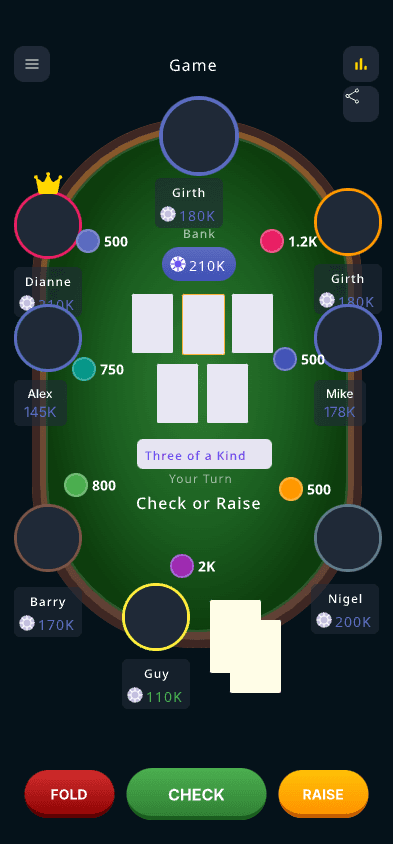
칩이 없어도 게임은 됩니다. 보드게임 지폐, 클립, 동전 같은 대체품도 되지만 결국 같은 문제가 남습니다. 값이 헷갈리고 사이드팟에서 무너집니다. 각자의 휴대폰을 스택으로 쓰면 그 두 가지가 사라집니다. PokerChip.live는 방을 만들고 여섯 자리 코드를 나눠주면 각자 화면에 자기 스택이 생기고, 바이인과 사이드팟과 마지막 정산까지 기록합니다. 카드는 그대로 테이블에서 돌립니다.
FAQ
01
흰색 1, 빨강 5, 파랑 10, 초록 25, 검정 100이 가장 흔한 관례입니다. 세트마다 다를 수 있으니 시작 전에 정하고 적어 두십시오.
02
개수보다 빅 블라인드 기준으로 보십시오. 캐시 게임은 빅 블라인드의 백 배 정도, 토너먼트는 오십에서 백 배 사이가 무난합니다.
03
버튼 왼쪽 첫 자리가 스몰 블라인드, 그 왼쪽이 빅 블라인드입니다. 버튼이 매 핸드 시계 방향으로 움직이므로 부담도 고르게 돌아갑니다.
04
올인한 사람이 낼 수 있는 금액까지가 메인팟이고 나머지가 사이드팟입니다. 팟을 따로 놓고 누가 어느 팟을 가져갈 자격이 있는지 확인한 뒤 진행하십시오.
05
칩을 한 번에 내지 않고 나눠 내면서 상대 반응을 보는 행위입니다. 대부분의 홈게임에서도 금지이며, 레이즈 금액을 말로 먼저 밝히면 예방됩니다.
06
모든 사람의 손익 합이 0이 아니라면 적히지 않은 바이인이 있거나 누군가 세지 않고 나간 것입니다. 송금하기 전에 이 합계부터 확인하십시오.
07
대체품을 쓸 수도 있지만 값이 헷갈리고 사이드팟에서 무너집니다. 각자의 휴대폰을 스택으로 쓰면 두 문제가 함께 사라지고 카드는 그대로 돌릴 수 있습니다.
08
칩을 건네는 그 순간입니다. 나중에 기억으로 복원하려 하면 거의 반드시 어긋나고, 그게 홈게임 장부가 무너지는 가장 흔한 이유입니다.
무료로 방을 만들고 플레이어를 초대하세요. 실시간으로 스택을 기록하고 게임이 끝나면 결과를 공유할 수 있습니다.
게임 방 만들기